Medical Microbiology History

Overview

The Pioneers (1600s–1800s)

  • Antonie van Leeuwenhoek (1670s): “Father of Microbiology.” Practical microscopes; first to observe and describe “animalcules.” See also Microscopy.
  • Edward Jenner (1796): First successful smallpox vaccine (cowpox) — foundation of immunization.
  • Ignaz Semmelweis (1840s): Handwashing with chlorinated lime; infection control before germ theory was accepted.
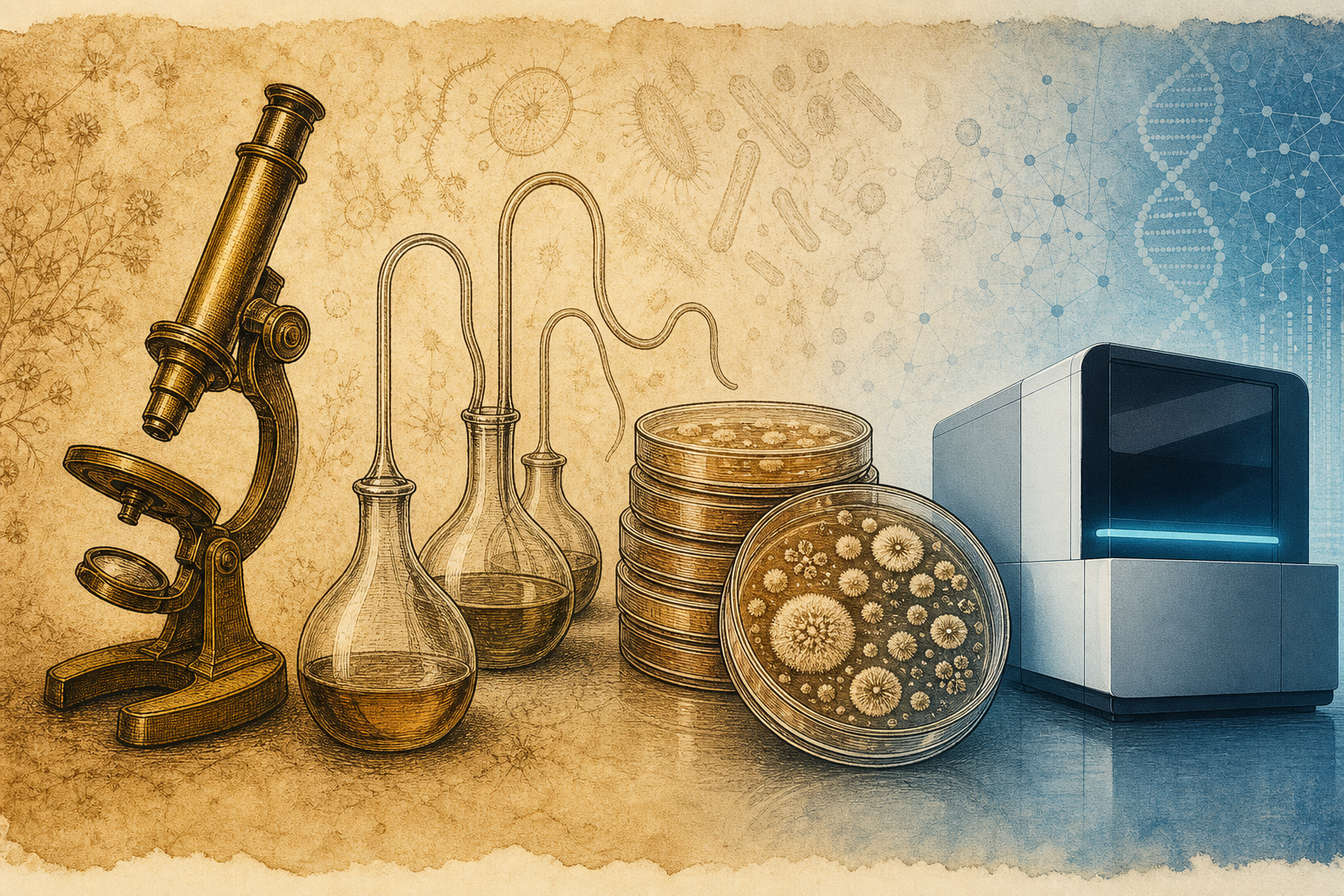
  • Louis Pasteur (1860s–1880s): Disproved spontaneous generation; Germ Theory; pasteurization; vaccines (rabies, anthrax).
  • Joseph Lister (1867): Antiseptic surgery (carbolic acid) applying Pasteur’s ideas.
  • Robert Koch (1870s–1880s): Etiologic agents of TB, cholera, anthrax; Koch’s Postulates.

The Golden Age & Chemotherapy (Early–Mid 1900s)

The Molecular & Genomic Era (Late 1900s–2010s)

The AI & Computational Era (2020s–Present)

Foundational Concepts from This Timeline

Notes & Connections

  • How did Koch’s culture-based causality evolve into genomic surveillance?
  • How will AlphaFold / protein design change AMR and antiviral research?
timeline
    title History of Medical Microbiology
    1670s : Antonie van Leeuwenhoek observes microorganisms
    1796 : Edward Jenner develops smallpox vaccination
    1840s : Ignaz Semmelweis promotes handwashing
    1860s : Louis Pasteur supports germ theory
    1867 : Joseph Lister introduces antiseptic surgery
    1876 : Robert Koch links Bacillus anthracis to anthrax
    1882 : Koch identifies Mycobacterium tuberculosis
    1884 : Gram staining is introduced
    1928 : Fleming discovers penicillin
    1940s : Penicillin enters clinical use
    1977 : Woese proposes Archaea
    1983 : Mullis invents PCR
    2012 : CRISPR-Cas9 genome editing
    2020s : AlphaFold and protein design